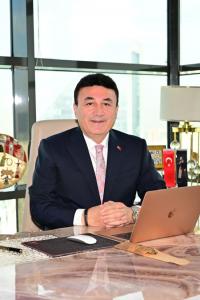
Hürana GÜNGÖR
Hürana GÜNGÖR – MATTERS A GOOD CANDIDATE FOR MAYOR SHOULD CONSIDER IN SUSTAINABLE URBAN DEVELOPMENT
MATTERS A GOOD CANDIDATE FOR MAYOR SHOULD CONSIDER IN SUSTAINABLE URBAN DEVELOPMENT
The requirements of urban life today;
This requires working at different scales to address the distribution of statuses, sustainable and long-lasting urban development policies, and to meet the unique characteristics, contradictions, interests and needs of communities, while ensuring employment opportunities, legal differences, race-related matters, social and environmental factors, culture, traditions, gender, comfort, urban development, prosperity, accessibility, the need for shelter, social housing, public health, infrastructure, transport, safety, the demands of vulnerable groups and migrants, and the oversight of all these phenomena in a continuously sustainable manner.
As Indispensable Principles of Metropolitan Municipalities in the Formation of Sustainable Cities;
Architectural and urban planning decisions,
Strategies that address inequalities,
Strategies aimed at reducing poverty and strengthening the democratic governance of the region,
By broadening the inter-disciplinary and inter-sectoral scope,
Participation processes and actions that, beginning from the grassroots, also include the top, addressing plural reality and social,
Plans based on accurate and continuously updated data, taking into account strategies aimed at giving voice to ethnic and gender differences, must be consolidated under the umbrella of metropolitan municipalities.
What determines the formation of neighbourhoods is not basic class distinctions, but mostly ethnicity and needs…
Producing impressive projects on paper at a desk never covers the city as a whole, so during on-site transformation the depreciation allowance will never be the same as the value on paper.
The fundamental aim of a sustainable city
should be the construction of an urban area that combats socio-spatial injustice,
prioritises democratic and inclusive public policies,
and ensures its own development through joint planning by the state and the collective consciousness.
Urban transformation has become a serious source of chaos for all parties throughout Türkiye.
No urban transformation effort can succeed without the support of local governments.
Negative Effects:
The lack of personnel with sufficient technical expertise within local governments,
Projects that cannot be completed within one electoral term not being accepted and supported in the next term,
Projects failing to achieve the desired success due to financial insufficiency and lack of trust.
Signatures not being completed because in many neighbourhoods citizens have been left alone with contractors.
The relevant public institutions, primarily the municipalities, not being involved in the process on a legal basis as guarantors.
How can a positive effect be achieved?
If, under Law No. 6306, an increase in zoning density can be permitted where necessary so that people can reside in sound buildings,
In the case of merging more parcels, this on the one hand enables the creation of liveable, high-quality spaces, and on the other hand allows for an increase in development rights.
Thanks to this transformation, when a certain area size is reached through the merging of parcels and even blocks, the problems of social facilities and parking will also be solved, and area will be gained for the green spaces that allow the city to breathe and for many sustainable-city core themes.
With these applications, which allow the merging of parcels and even blocks, the problems in the city’s risky areas will be solved holistically.
In this way, secure settlements and buildings with additional social facilities and cultural areas, underground car parks along with park areas, children’s gardens and play areas will be obtained, thus creating a liveable, sustainable environment and urban spaces.
The main problem here is economic and developmental.
A sustainable city and sustainable development must be treated as an inseparable whole,
and addressed as the main framework that must advance together at every stage of planning.
Good, healthy housing prepared through financing suited to the means of families in need, in locations suitable for everyone, must be treated as a matter of social justice and public health.
Disasters, Environmental Crises and Public Health
These problems affect the population unequally in the areas where they occur. For this reason, when planning our cities, a more micro planning strategy must be developed, and entrepreneurship and development must be strengthened at the local level.
For instance, nine months have passed since that dark day, the 6 February Kahramanmaraş earthquake. As for Istanbul, 24 years have passed since the 17 August earthquake.
Turkish society shows a tremendous collective solidarity in such disasters.
However, it is said that in the event of an earthquake in Istanbul after 24 years, since we will have nowhere to place our bodies, the lucky ones can be sent to their hometowns, provided of course that their identities can be established.
Or we all know that no security, health, search-and-rescue or volunteer unit will be able to reach us, including via the main arteries of our roads.
If we are lucky and assuming we survive the earthquake, I believe that is when we are truly in trouble. Because we will find no humane conditions around us. No assembly area, no water, no hygiene, no health unit, no food supply, and no security… We will try to live as complete survivors.